Barack Obama's legacy is more complicated than his admirers want to believe.
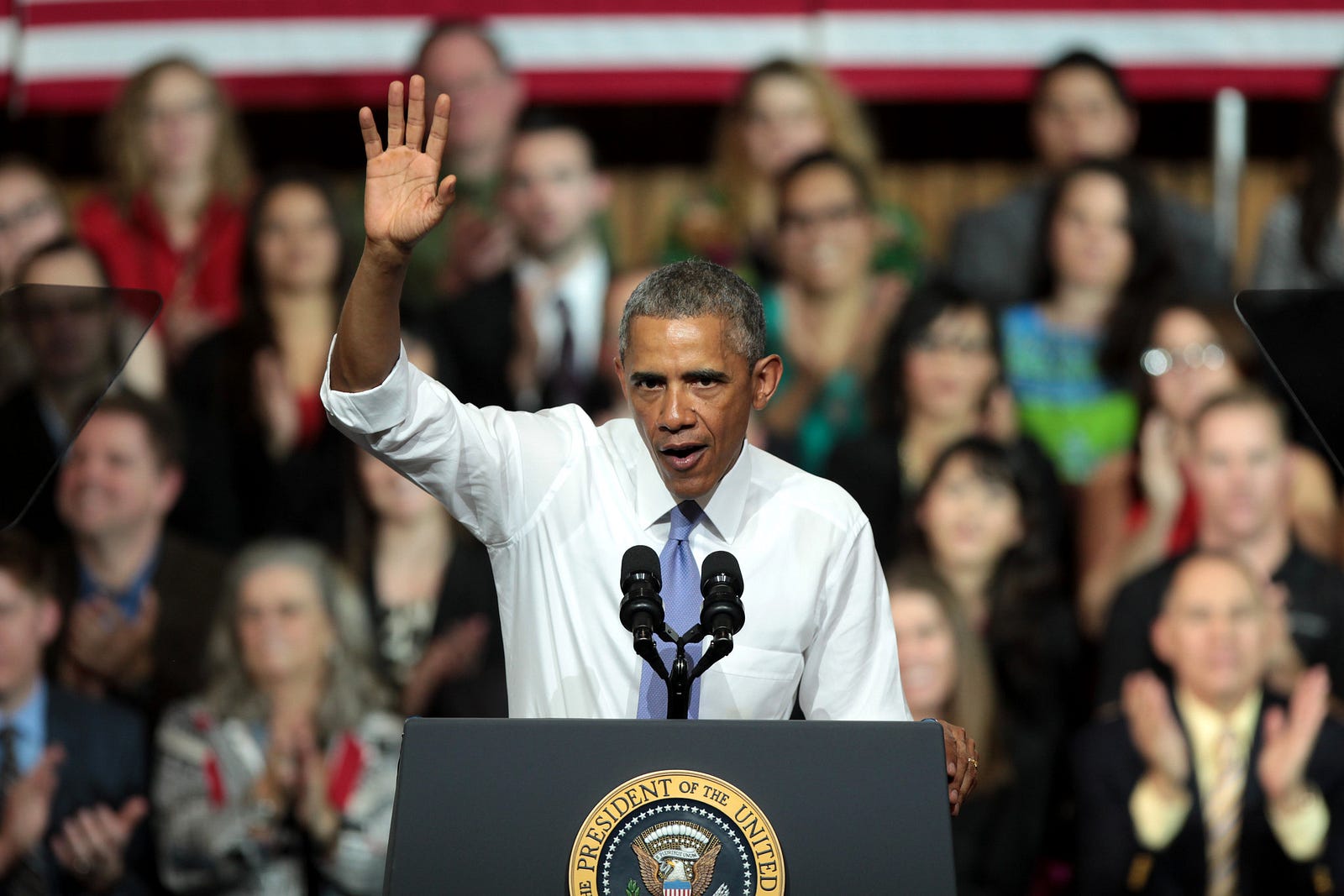
Barack Obama’s legacy is more complicated than his admirers want to believe.
That does not mean he was a failed president in every respect. It means the glowing version of the Obama years, now being polished for museum display, leaves out too much. Obama was not merely the cool, historic, cerebral president who inherited chaos and restored dignity. He was also the president who repeatedly chose delay over resolution, especially abroad, and left some of the hardest consequences for later.
Iran is the clearest example.
The Obama administration’s nuclear deal with Iran was defended as a triumph of realism. The United States was exhausted after Iraq and Afghanistan. Nobody wanted another Middle East war. Obama’s team argued that diplomacy could place Iran’s nuclear program in a box, extend its breakout time, and allow inspectors to monitor what Tehran was doing. On its own terms, the deal did some of that. It restricted enrichment, reduced Iran’s stockpile, limited centrifuges, and bought time.
But buying time is not the same as solving a problem.
The Iran deal did not end Iran’s nuclear ambitions. It did not dismantle the regime’s nuclear infrastructure. It did not stop its missile program. It did not end its support for Hezbollah, Hamas, the Houthis, or Shiite militias across the region. It did not change the basic nature of the regime. It separated the nuclear file from everything else Iran was doing, as if those things existed in different boxes. Tehran never saw it that way.
Iran’s nuclear program, proxy network, missile development, and anti-Israel strategy were all part of the same project: regime survival and regional power. Obama treated the nuclear program as a technical arms-control problem. Iran treated sanctions relief as breathing room.
That is the essence of the can-kicking critique. Obama did not create the Iranian threat. He inherited it. But his answer was to make the threat less urgent, not less dangerous. The hard questions were pushed forward. What happens when restrictions expire? What happens if a future president withdraws? What happens when Iran takes the money, strengthens its regional position, and waits out the clock?
We know the answer now. The problem came back, only worse.
This is not an argument that Trump inherited a clean slate and Obama ruined it. Foreign policy is never that simple. George W. Bush left Obama with a miserable set of choices. Trump withdrew from the Iran deal in 2018, which Obama defenders still argue accelerated the crisis. Joe Biden also tried and failed to revive the agreement. There is enough blame to go around.
But Obama’s admirers want to skip over the central weakness of his approach: the deal depended on temporary restrictions, Iranian restraint, international unity, and the patience of future American presidents. That is not a settlement. It is a postponement.
Afghanistan tells a similar story. Obama sent more troops while also announcing a timeline for withdrawal. That gave the appearance of toughness and the comfort of an exit plan, but it also revealed the basic contradiction. America was fighting a war it no longer believed it could win, on behalf of institutions that could not survive without American support. The eventual collapse in 2021 happened under Biden, but the logic of withdrawal had been bipartisan for years. Obama did not invent that failure. He helped normalize the idea that the United States could signal departure and still expect enemies not to adjust.
At home, the pattern was different but related. Obama’s domestic legacy was not delay so much as overreach. The Affordable Care Act expanded coverage, but it also broke political trust. Americans were told they could keep their plans. Many could not. They were told premiums would fall. For many, they rose. The law became a permanent federal project requiring more subsidies, more fixes, and more political defense.
Immigration followed the same pattern of executive improvisation. When Congress would not pass what Obama wanted, he used executive power. Supporters called it necessary. Opponents saw it as proof that elite policy goals would be imposed whether voters consented or not.
That backlash helped create Trump.
Obama remains personally popular, which makes this harder for Democrats to process. Many Americans still like him. They remember the speeches, the symbolism, the calm, the family, the history of his election. But political legacy is not the same thing as personal approval. A president can be admired and still leave behind policies that fail, fractures that widen, and crises that return.
In Iran, Obama bought time. Trump is now dealing with the bill.
The uncomfortable truth is that Obama’s presidency did not end the old problems. It often repackaged them. Iran was not resolved. Afghanistan was not stabilized. Health care was not made affordable. Immigration was not settled. The country was not brought together.
Obama’s legacy is not only the Trump presidency. But Trump’s rise makes much more sense when viewed as a reaction to Obama-era assumptions: that experts could manage decline, that opposition could be talked around, and that delay could be mistaken for peace.
The Obama museum may tell one version of the story. The world he left behind tells another.
(Contributing writer, Brooke Bell)